
McLean County's Multi-Day Arrest Blotter
The county's Daily Blotter page hosts the McLean County Sheriff Blotter PDF. The county's Reports and Statistics page calls it an incident and arrest blotter. One edition spanned August 13 through August 22, 2026. Nine days is not a promise. The span shows what that one file listed. It is not a permanent archive. Some events may be missing from it. Arrest rows sit beside other incident reports. Each row gives the event time, offense label, location, officer, and report number. Custody is another matter, since the file carries no release, transfer, or housing field.
Read McLean County Arrest Reports
Treat each row as one agency report. It is not the full story from arrest to court. Similar names and repeated locations invite false matches. Because the file at the same URL can change, save the access date and report number before any follow-up.
- Open the official landing page and then its current Sheriff Blotter PDF.
- Start with the report date and time, then compare the full printed name and age.
- Read the offense, report type, address, officer, and report number as separate fields.
- Use the report number when asking the Sheriff for the underlying record.
- Check the court portal later for a case and disposition, without treating it as real-time custody data.
Need same-day results? The Arrested Today page provides a distinct fallback chain for when timing matters more than the blotter's wider span.
McLean Arrest Report Fields
The PDF keeps its fields lean. Several common booking fields are simply not there, so avoid filling the gaps with guesses or an unofficial listing.
| Field | Meaning and limit |
|---|---|
| Date/time | The event timestamp printed in the report. |
| Arrestee and age | Identity fields as published; confirm before matching. |
| Offense | An charge or event label, not a conviction. |
| Type and address | The report class and associated location. |
| Officer and report number | Agency references that support a targeted request. |
| Photo and custody | No photograph, bond, booking ID, release date, housing unit, or live status appears in the verified PDF. |
The official blotter route can be seen on the county page:
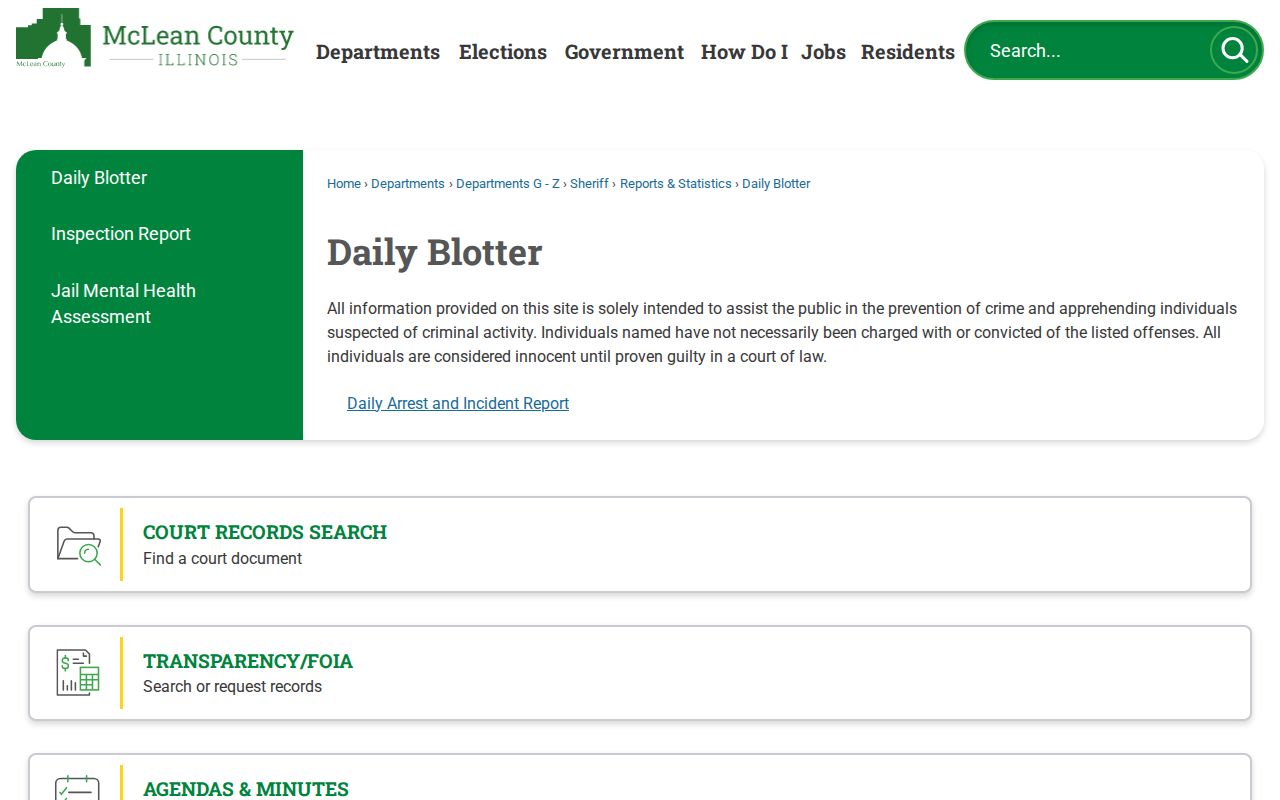
This capture shows the public report entry point, not a searchable inmate roster.
McLean Weekend Arrest Report Gaps
McLean County publishes no weekend cutoff, holiday delay, or posting hour for the blotter. The Sheriff's app and the PDF answer different questions. Compare event times, not publication times. A Monday entry can describe an earlier arrest. A recent arrest may stay out of view during processing. Someone may be arrested by Bloomington, Normal, or Le Roy police. That person may still be booked at the county jail. City and county sources can carry different details about the same event. Normal also runs its own incident log. It reaches beyond arrests. It cannot replace the Sheriff's custody channel.
McLean Arrest Archives and Requests
The Sheriff PDF has no archive browser. No published rule says when a row rolls off. Illinois records law bars disposal outside the approved process. That framework still sets no McLean County booking-retention period, nor does the county name an app retention window or archive depth. Start an older request at McLean County Police Records and the linked Sheriff FOIA portal. Name the person. Add the approximate event date and arresting agency. Include the report number. Ask for the arrest record and any booking record as distinct items. Request a photo separately, "when and if available," because the PDF carries none and law may limit disclosure. The county Transparency and FOIA page shows the official request links and instructions:
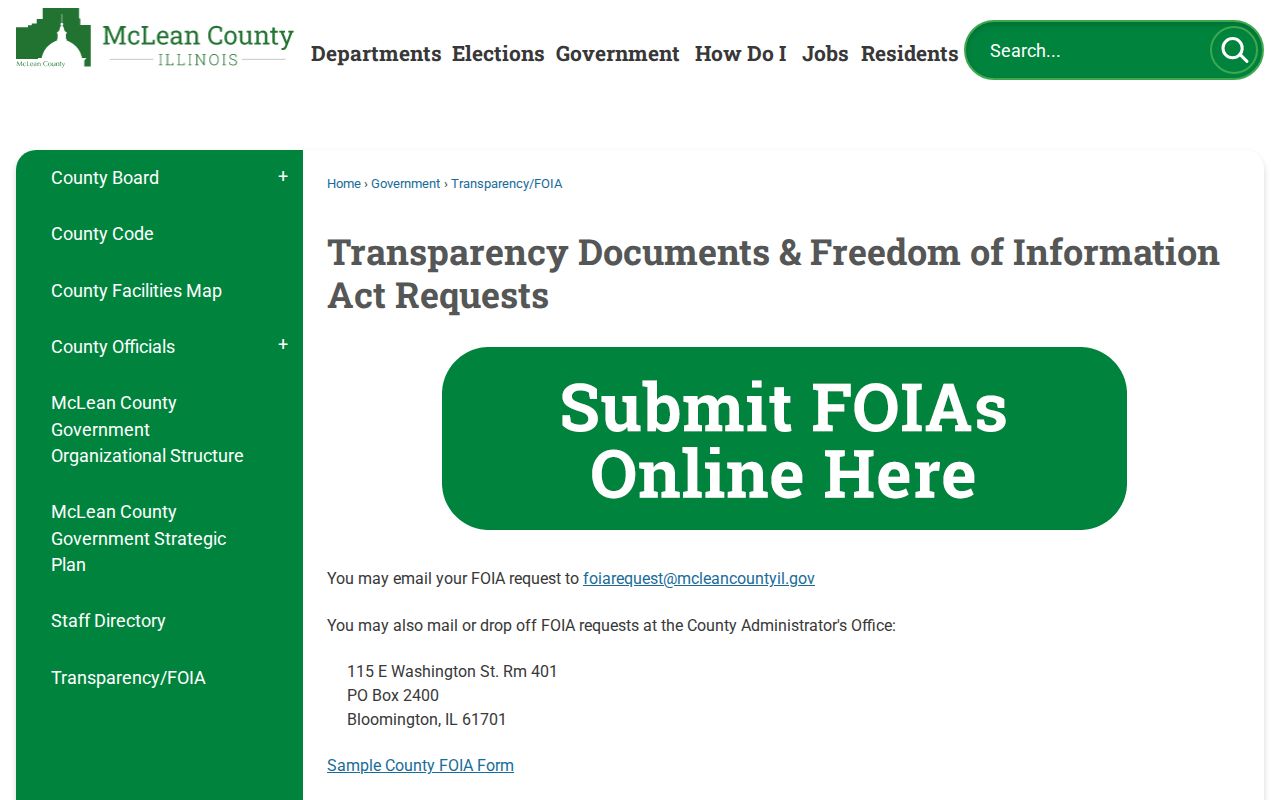
Use this route once the live blotter no longer shows an older report. Much older digging points elsewhere. The Illinois Regional Archives Depository at Illinois State University holds McLean jail registers from 1905 through 1996. Those registers are history, not a current arrest database. No sign exists that today's booking photos go there. Local news adds context after a significant arrest. WGLT Police and Courts and 25 News Now Crime and Courts both cover McLean cases. They are newsrooms, not complete logs. A dated article cannot prove present custody, so confirm every news detail against the Sheriff, the originating agency, or the court record.
Older McLean County files move faster when you send the public report number with your request. That one detail separates a Sheriff arrest event from a city incident log or a later court case. It also keeps the records office from pulling the wrong booking. Some portions may come back redacted. Ask the custodian to cite the legal basis for anything withheld. Never assume a missing field was an error. A shared name proves nothing on its own, so compare the event date, agency, report number, and any lawful identifiers before linking a court docket to an arrest.
The PDF behind the county arrest archive can change while its URL stays the same. Cite it with an access date. Keep the report number on hand rather than copying a single line without context. Spotted an error in a published entry? Request the source record first. Then send the correction question straight to the agency that produced it. Expect wording to vary across sources. A city police description, a Sheriff blotter row, and a court docket can describe the same McLean County arrest in different terms, so weigh their dates, agencies, and procedural stages side by side.
Normal's Separate Arrest Report Context
Normal runs its own reporting channel. The Town's Daily Log is a separate animal from the Sheriff's blotter. Each entry lists time, date, officer, type, report number, address, and a description. Not every call ends in an arrest. Many are simply routine police activity around Normal. Treat this feed as context rather than a McLean County jail roster. The public Normal Daily Log interface shows those incident fields. It serves anyone tracking local police activity.
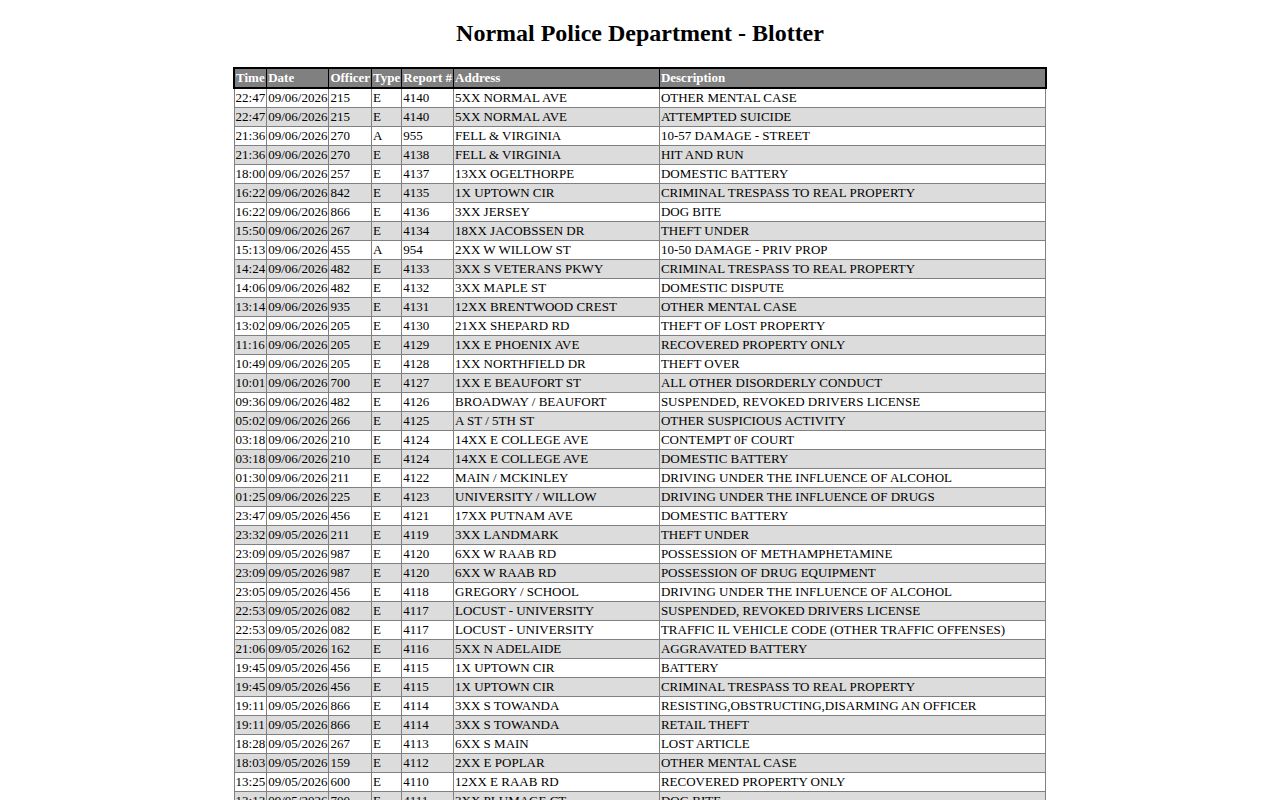
The Daily Log works best as a starting point. Grab an incident number or description there. Then head back to the Sheriff for county booking details. The two records answer different questions. Timestamps deserve special care. A police incident time is rarely the jail intake time. News outlets publish on their own schedule, and court filings often come later still. Normal reporting, the Sheriff blotter, and news coverage may all describe one event. Keep each timestamp and label distinct. Blending them creates a false timeline built from sources that were never meant to match.
Follow McLean Arrests Into Court
An arrest report opens the public trail. The courtroom closes it. McLean County's official criminal search takes a name, a case number, or a birth date, which makes tracking a recent arrest into the courts fairly simple. One caution applies: the portal states plainly that its public data is not real-time and does not replace the official court record. Find the case and docket events there first. Then request the official file whenever the exact disposition matters, and confirm the record matches the right person.
- Arrest report
- The agency's account of an alleged event.
- Booking record
- The jail intake record after delivery to custody.
- Docket
- The dated list of filings and court events.
- Disposition
- The court's resolution, which may differ from the charge first printed.
Resist the urge to flatten these sources into a single "arrest log" entry. A careful review keeps the original charge, any later amendments, and the final outcome as separate facts. That discipline preserves accuracy while still offering a practical path from the multi-day blotter to an official case record in McLean County.